The Question of Justice
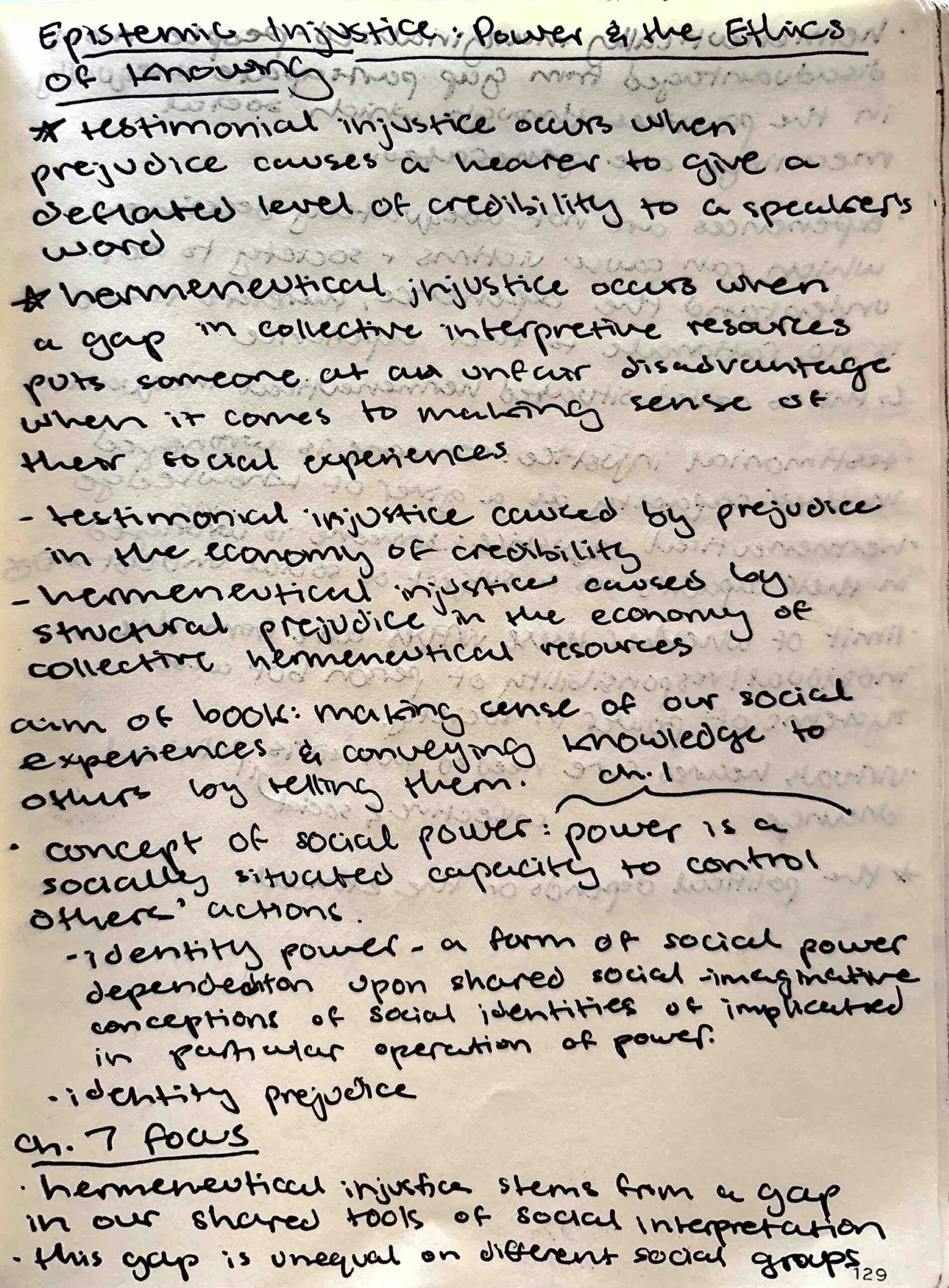
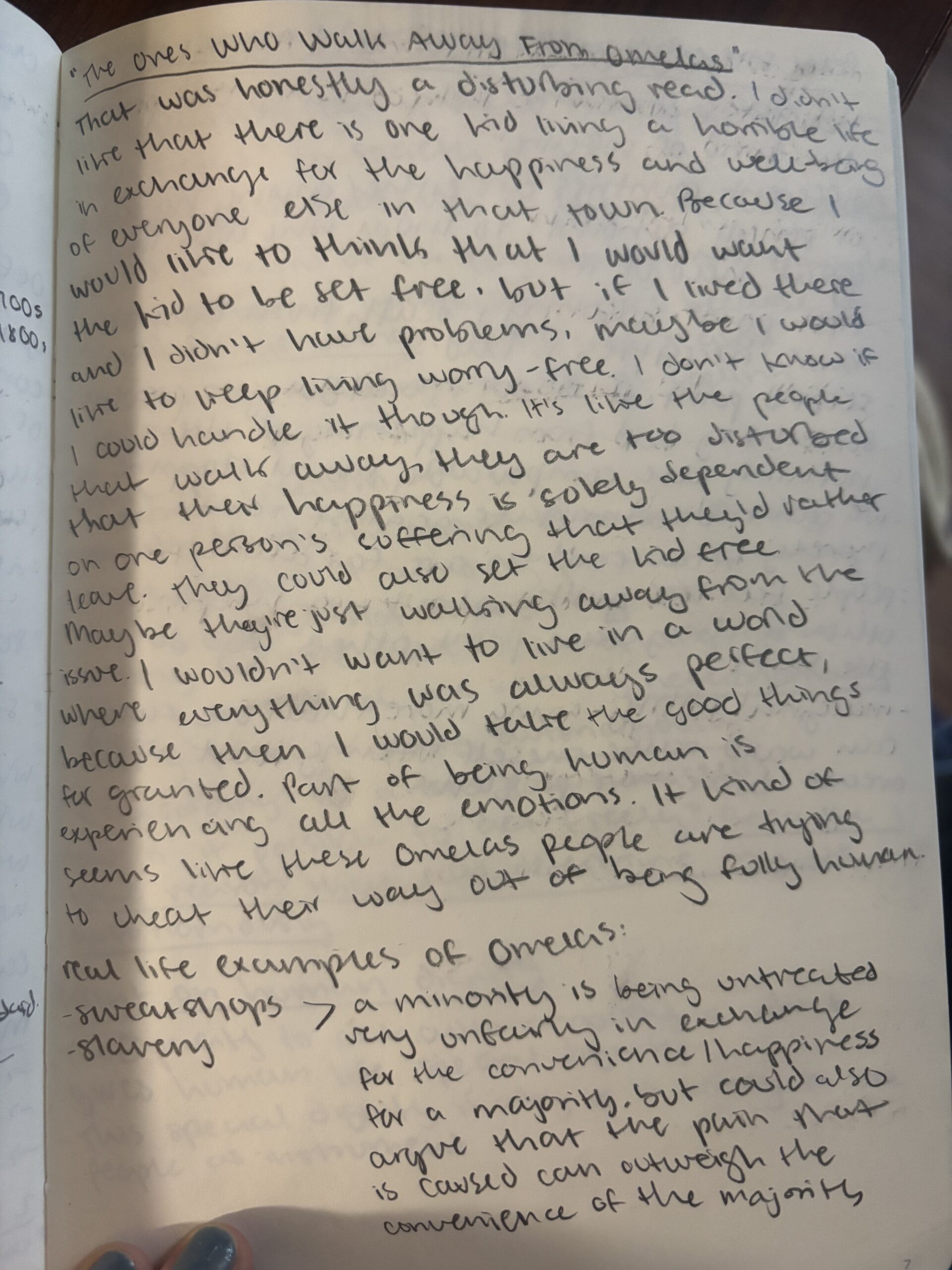
“Justice does not always mean law.” Dr. Lipsker started off his semester reflection on the Humanities course with this sentence during Plenary on December 9, 2025. What does it mean, then? Justice is in our everyday lives. How it shows up in my life, in my context. How it shows up in other people’s lives and their context. What is the need for justice in the systems that I live in, study in, practice my religion in, how can I think about my society regarding if I live in a just world or not? And then, how does it look like to restore justice? Is justice an active, past, or future concept, regarding making past events better, making current events more just, or preventing unjust things from happening? What sources do we use to identify what really happens? In the case of the TRC in South Africa, who does one listen to? The victim, or the perpetrator? What is the value in listening to one over the other, or both. Do their voices carry the same weight, and who gets to decide what the ruling is, or what the consequence is? Whose story has been shut down or ignored in the past, and what does this mean when we listen to that story now- how do we compensate for that? Will it ever be enough to be compensated for an unjust event? One cannot undo the past. But can one be restored of what happened to them or their family member in another way? Who establishes the systems of justice and why do they get to determine the systems? What privilege does one walk in with already where they could possibly benefit from those systems that they are creating in the future?
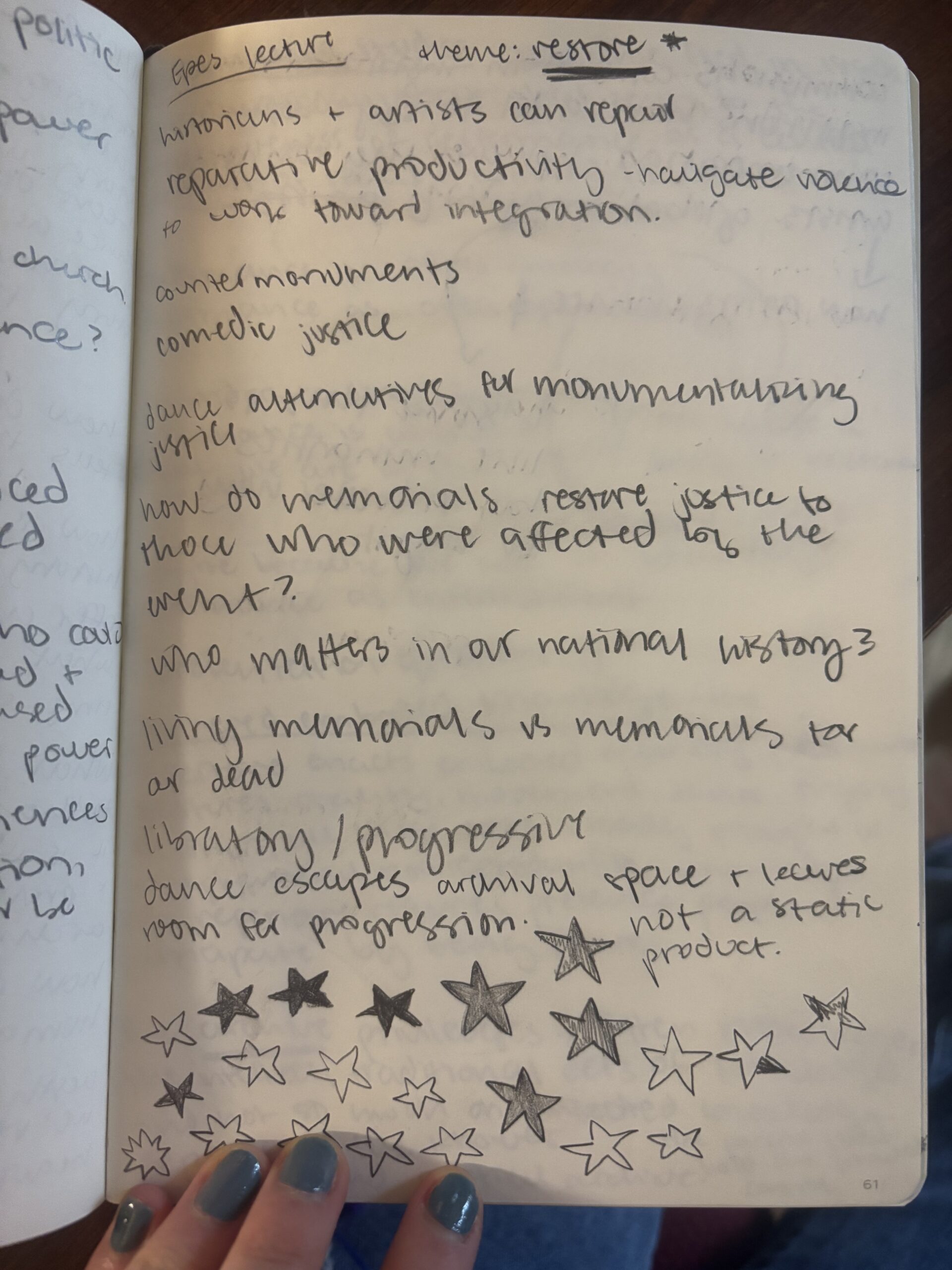
Dr. Weimers said, “History has a way of turning everything into an artifact”. What does that mean in terms of what is being recorded? When you restore something, does that mean you are destroying something else? Who does that impact unjustly?
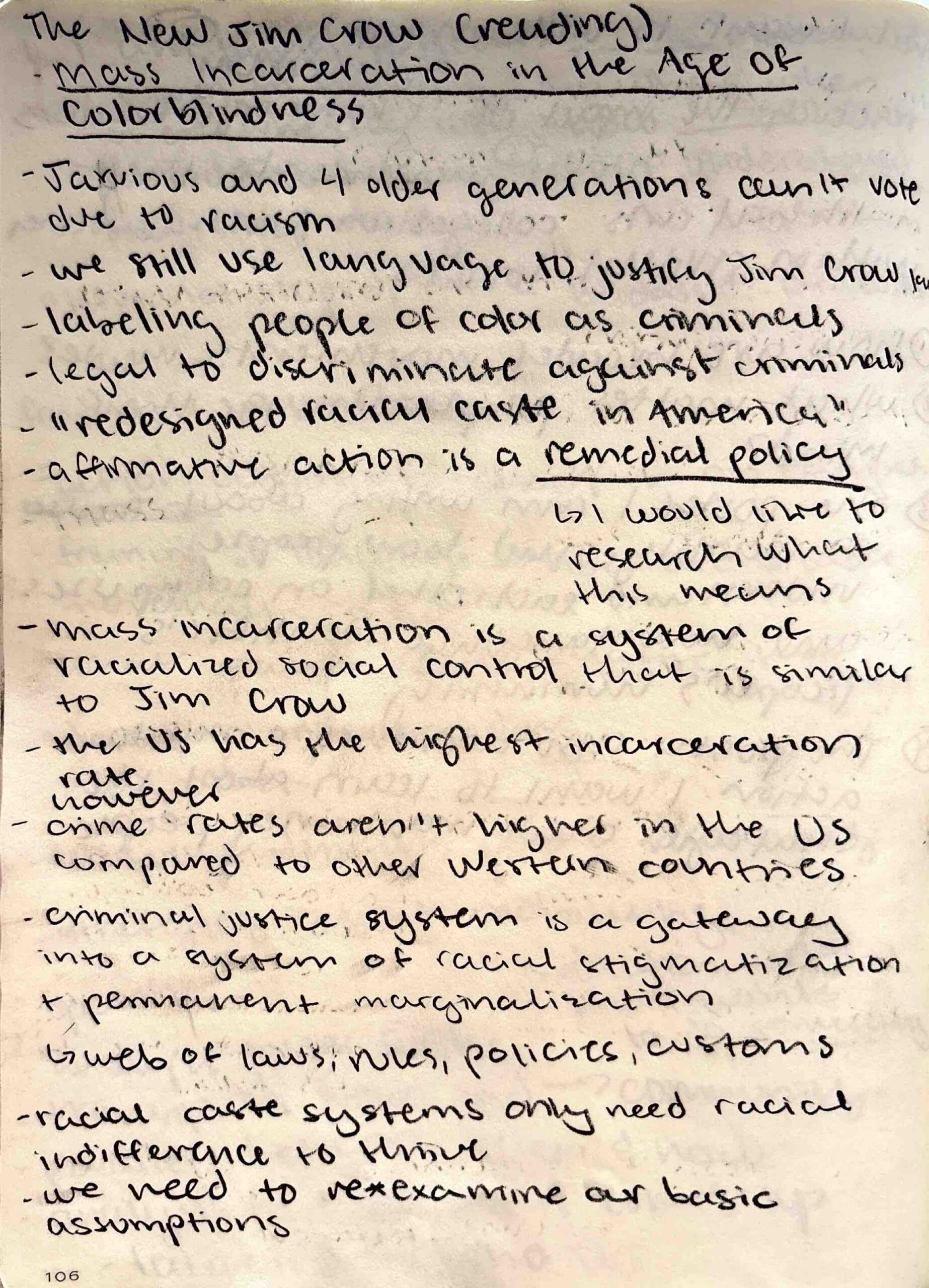
This past semester, I have learned through other mediums and topics how justice shows up in our world. Dance, disease, civil rights movements, Supreme Court cases, Sanskrit words, surveillance and our police system, intelligence centers, mass incarceration, reparations across nations addressing colonialism, the environment, choreographies, protest, blood, and sweat.
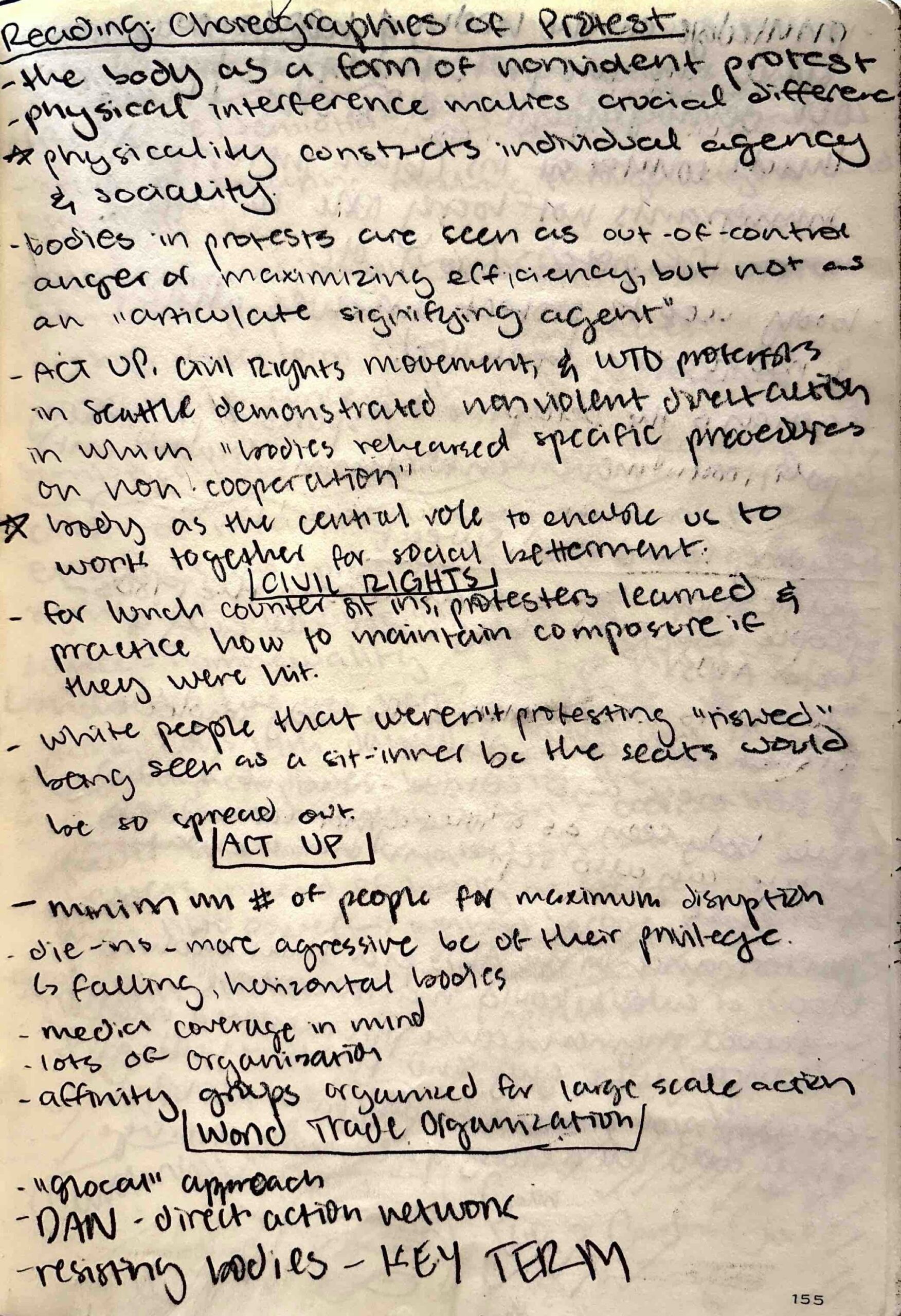
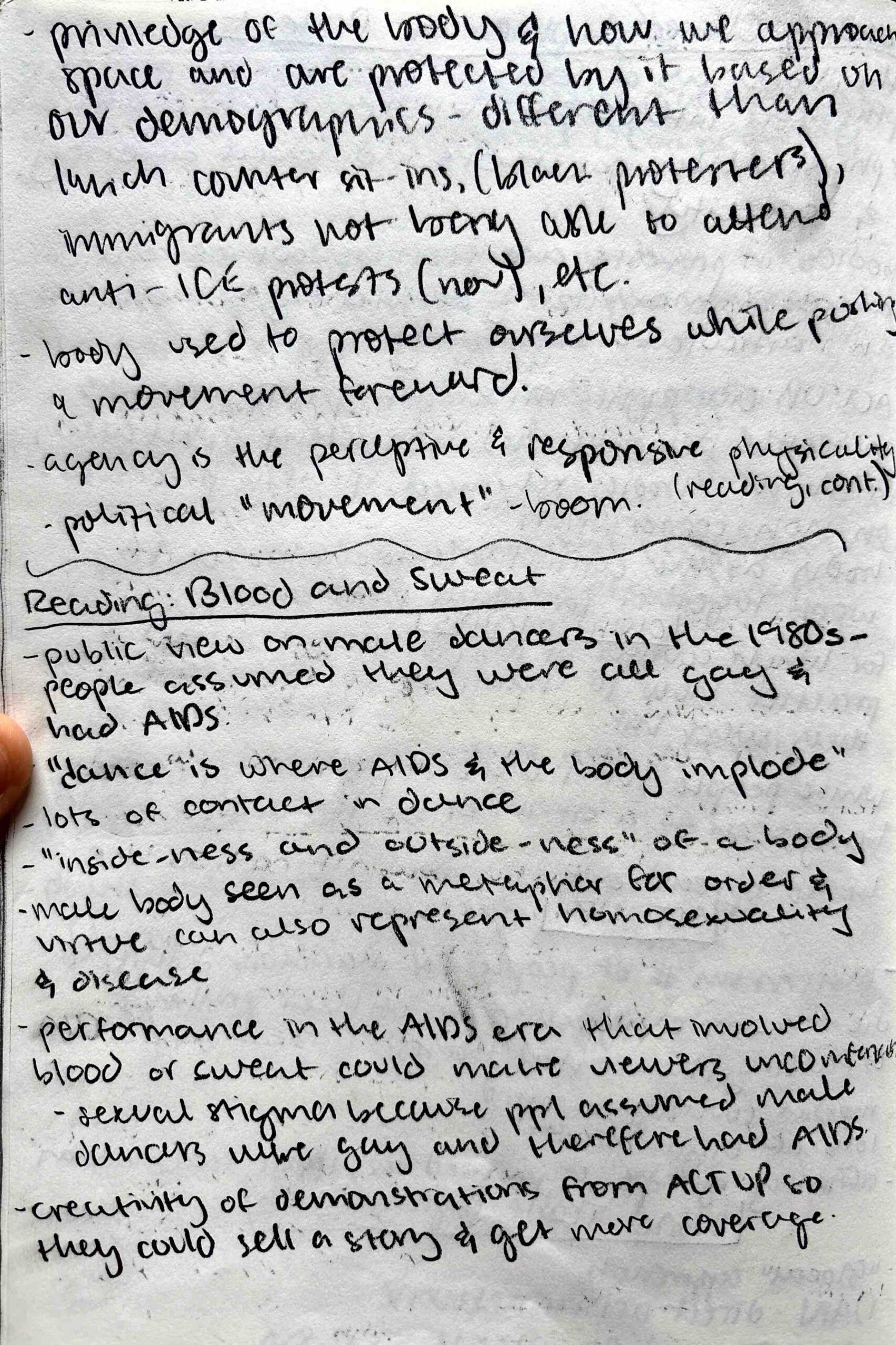
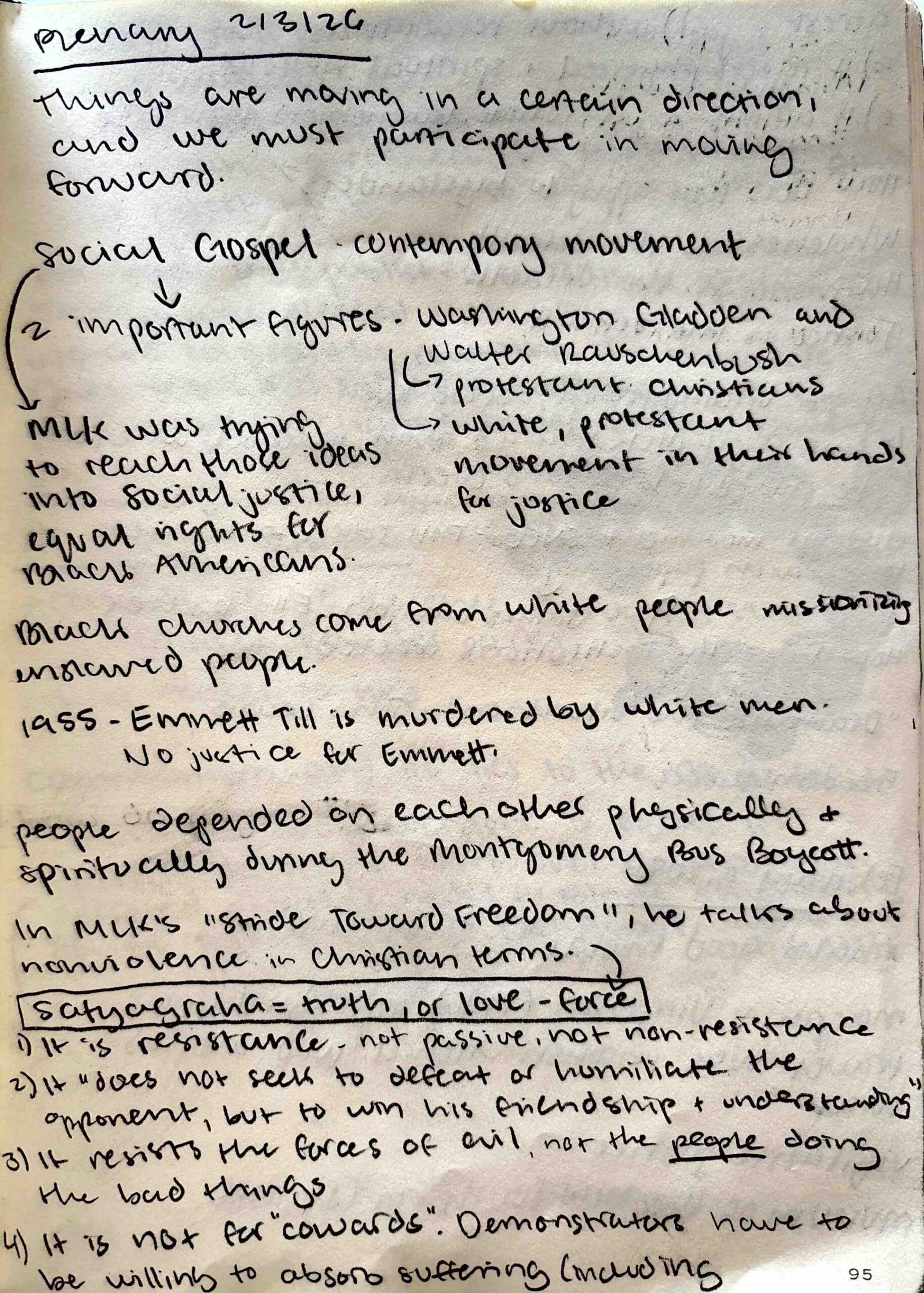
When discussing the civil rights movement, we talked about how peaceful demonstrations were what moved the needle, like lunch counter sit ins, even though demonstrators were met with violence and hate. This was different than the demonstrators for AIDS injustice, where some demonstrations were peaceful, and others were more upfront, like doing a demonstration in a church and disrupting the service in order to make the important point. We talked about how depending on the demographics of who was involved, say a white person demonstrating versus a black person demonstrating, the consequences were very different.
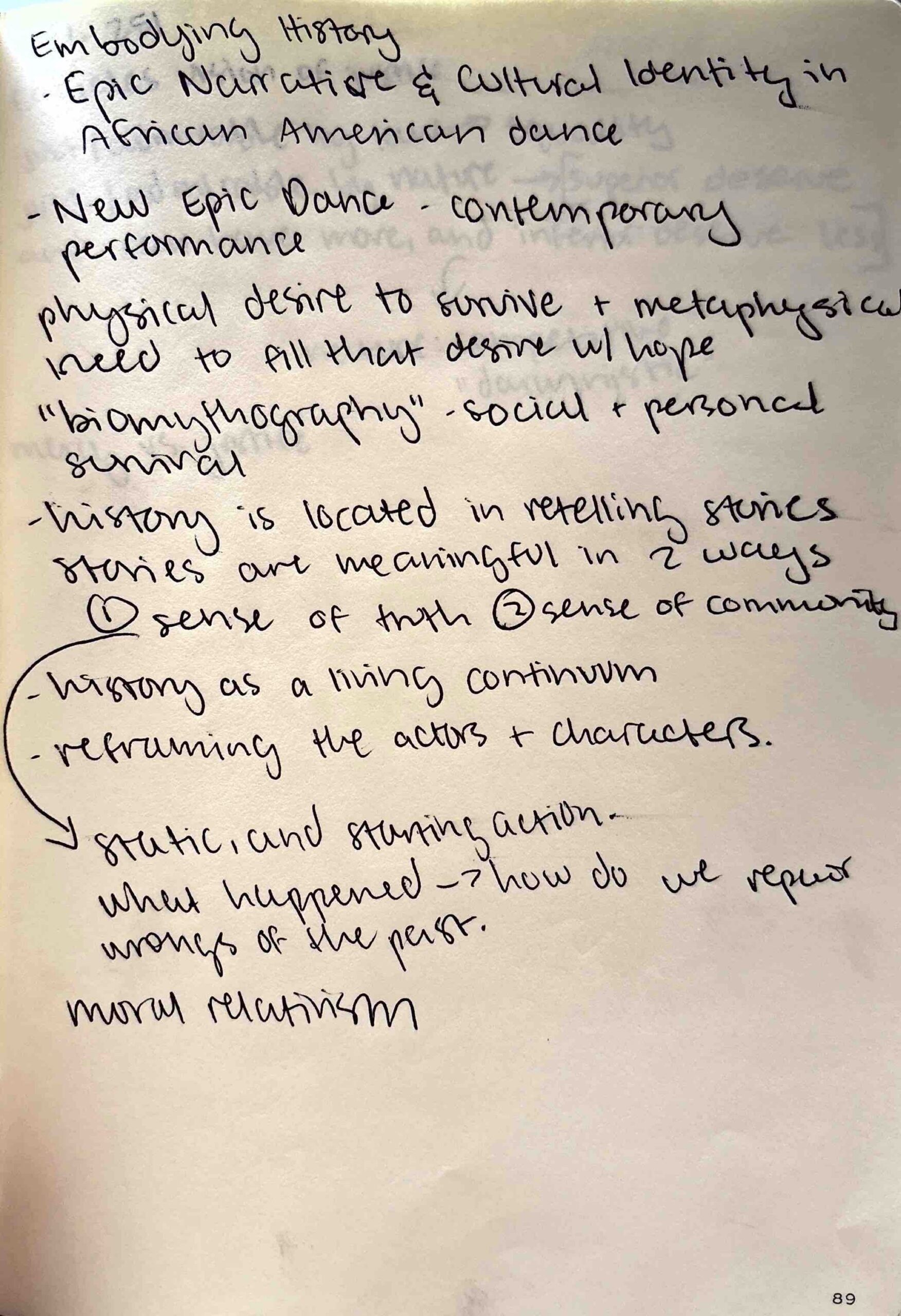
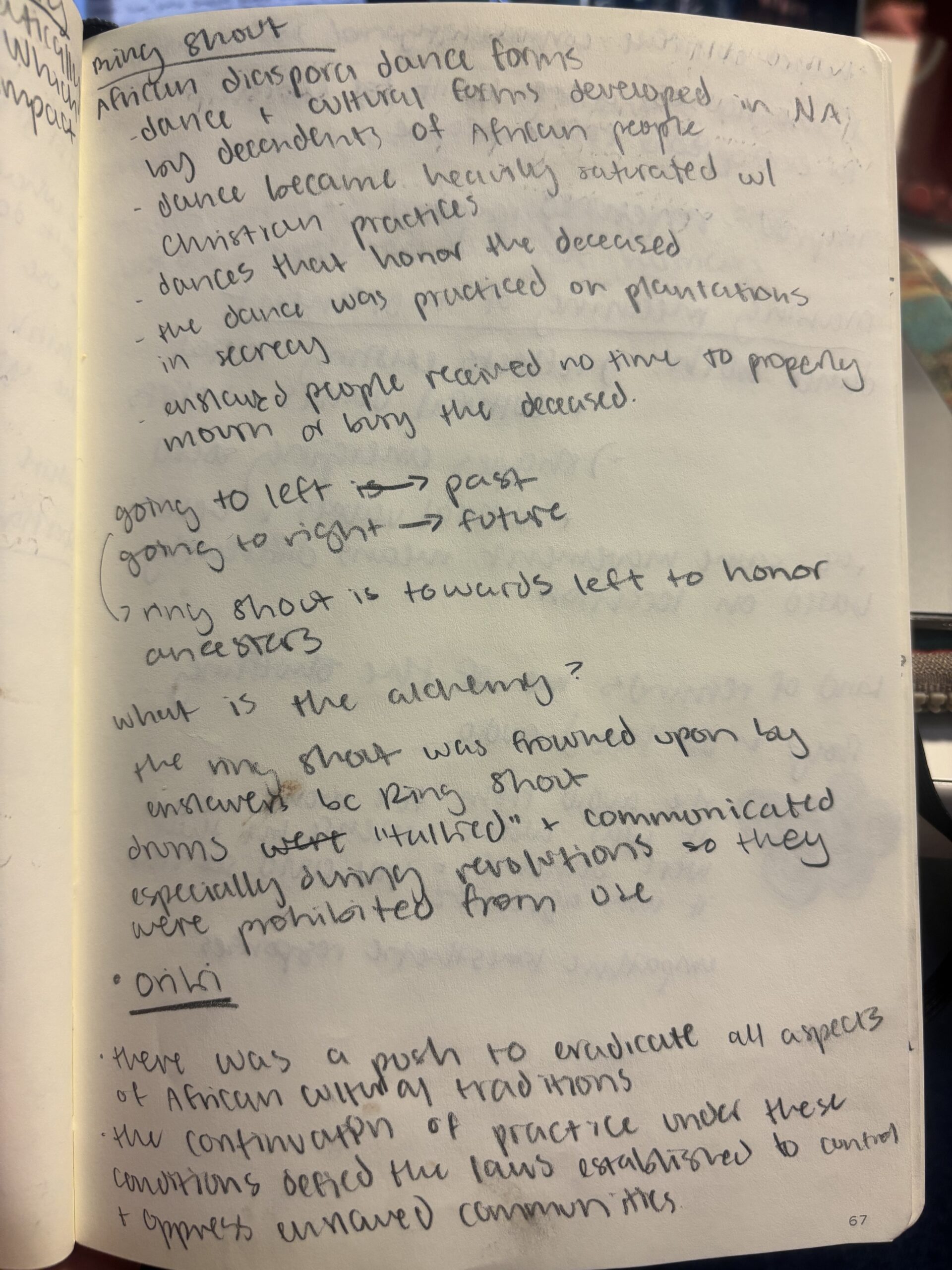
Justice also shows up in movement. Dance is a way in which bodies can express identity and history, and bringing those important narratives to the conversation. It was very interesting to learn about how dance could encompass justice through different realms, like racial justice, advocating for healthcare and proper treatment in the AIDS epidemic, and queer visibility and representation in those spaces.
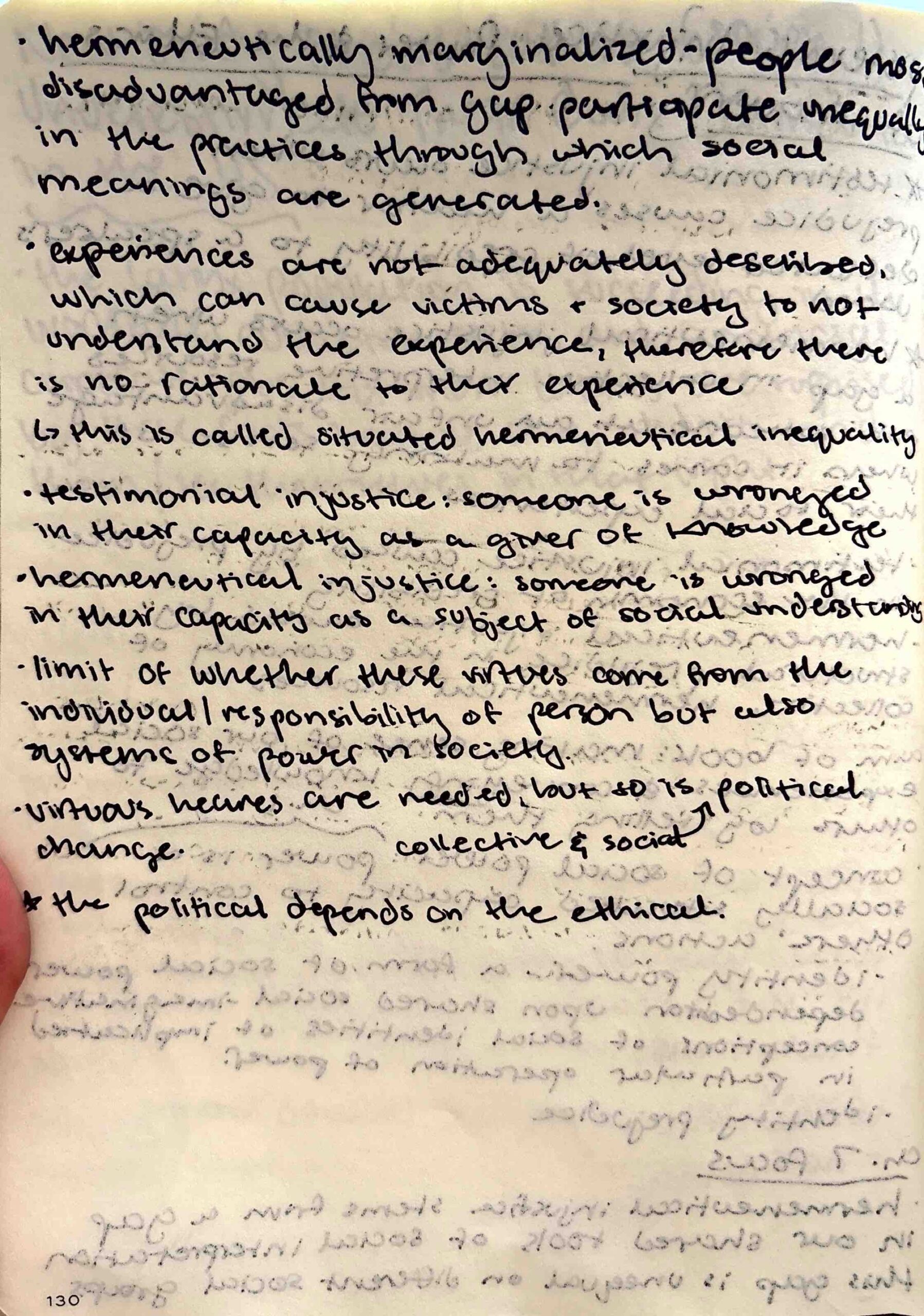
Philosophy played a major role in the foundation for our understanding of justice at the beginning of the year. This was difficult for me because the content was challenging to read, but I understand now how it provides the basis for the content that we talk about later in the year. Reading from different thinkers and philosophers, it occurs to me that justice cannot be one thing, because we all come from different moral standpoints, and have different lived experiences- therefore justice does not look the same for all, but we can ultimately strive for something that gets close to it. It is hard to believe that justice will ever be achieved because of that fact, but it was encouraging to read about all of the different movements and how that can be transferred to a movement today– advocating for immigration justice and reform.
My focus on immigration was a combination of personal and civic interest. My parents are immigrants, and I have many friends and families that are immigratns and have suffered injustices due to their status. I have also seen how our country as a whole is suffering. I wanted to take what I had learned in Humes and apply it to this issue, and that is why much of my focus is about immigration and understanding the complexities of it, but also the human experience.
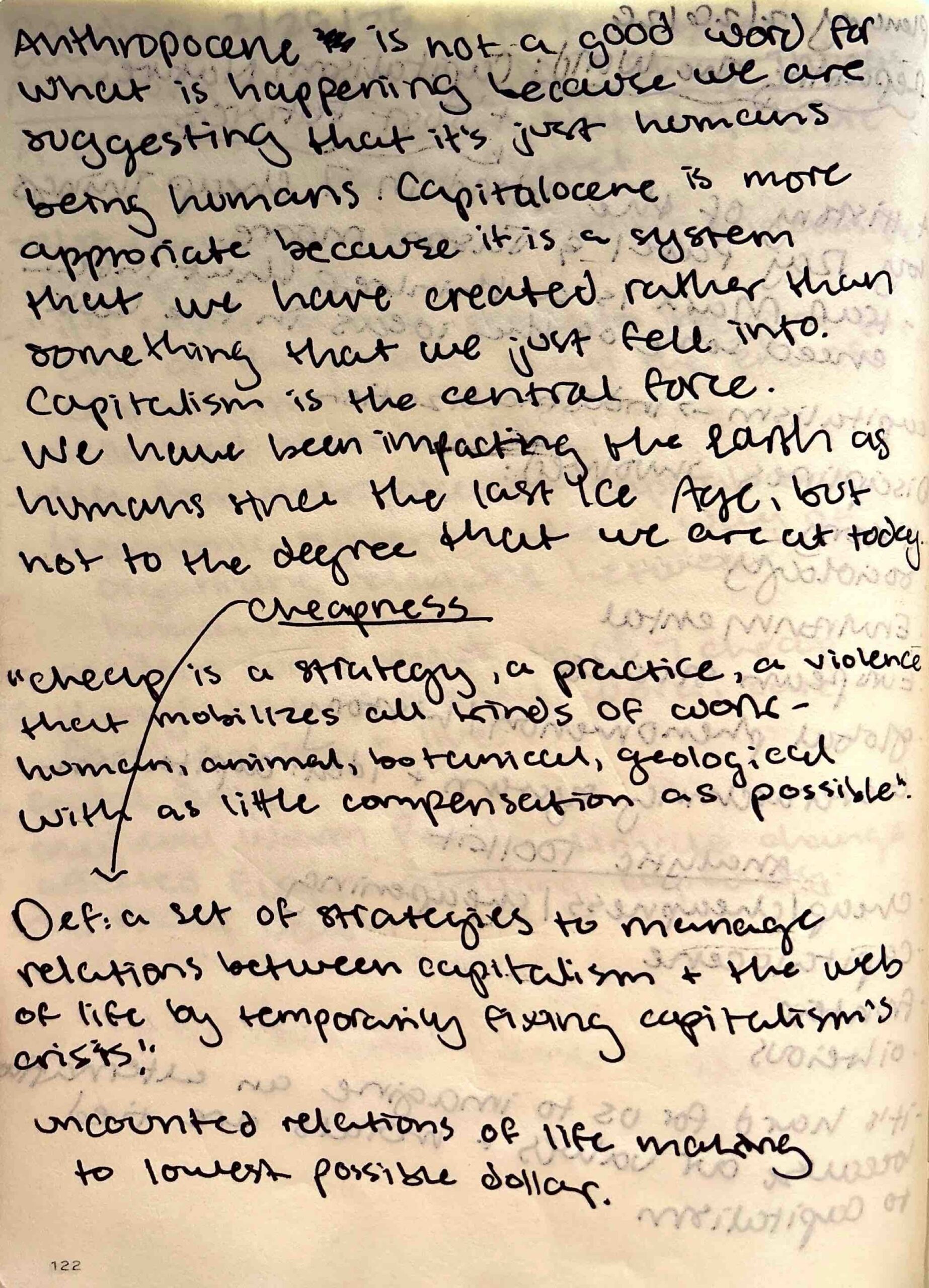
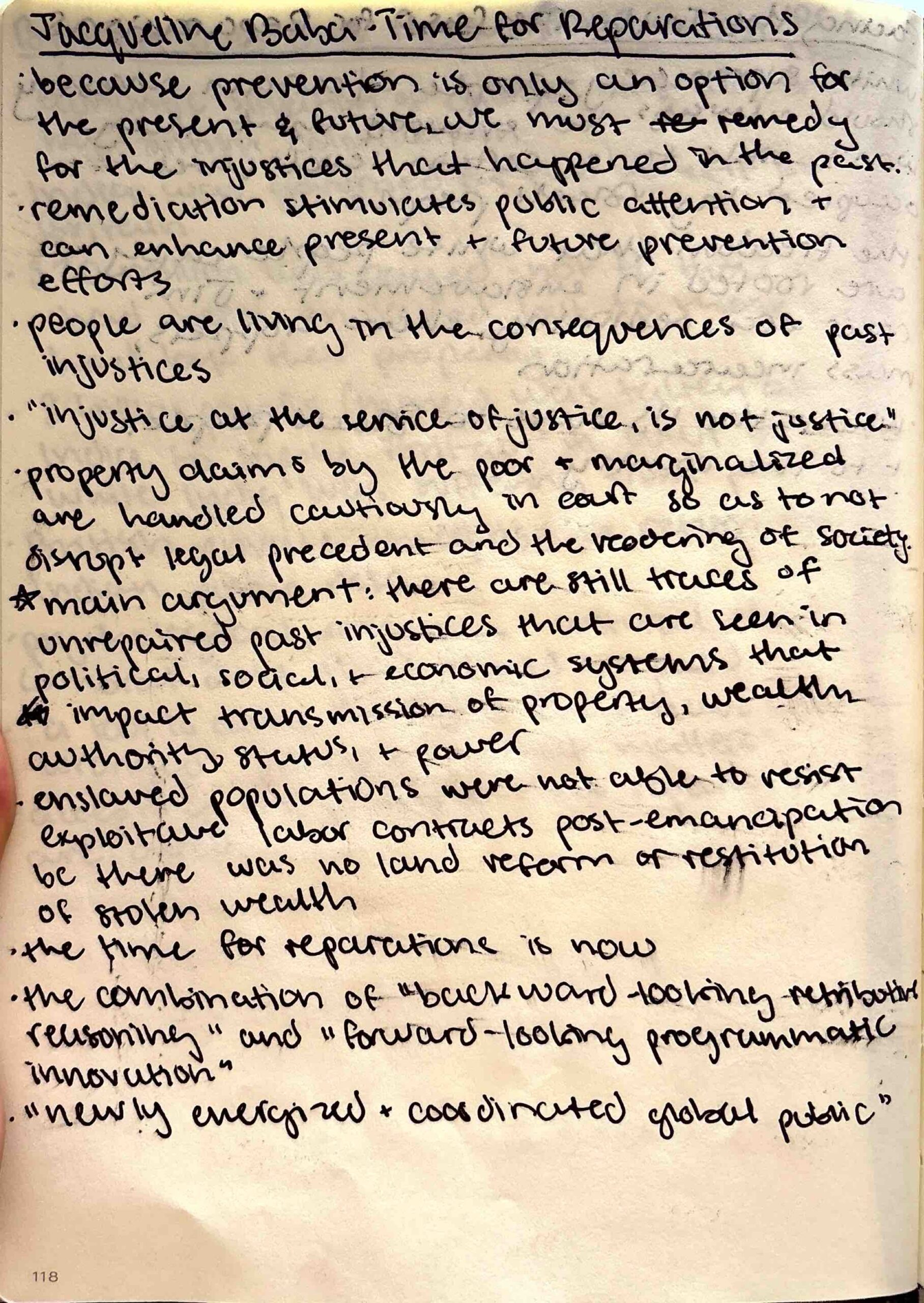
Thinking about reparations, it is hard to think about the ways in which reparations can fix the harm that has been done in our country. It seems like the easy way is to move forward, but I learned that justice is about understanding history as well. You cannot move forward without looking back. It is much harder to do this, because it comes with recognizing the part that we have played, or the lack of action that we have taken, for the systems that exist today that contribute to injustice. Take the reading about cheapness- it claims that capitalism will literally make the Earth crumble. After reading that, it is hard to grapple with the fact that we have to change our individual actions to sincerely help the planet.
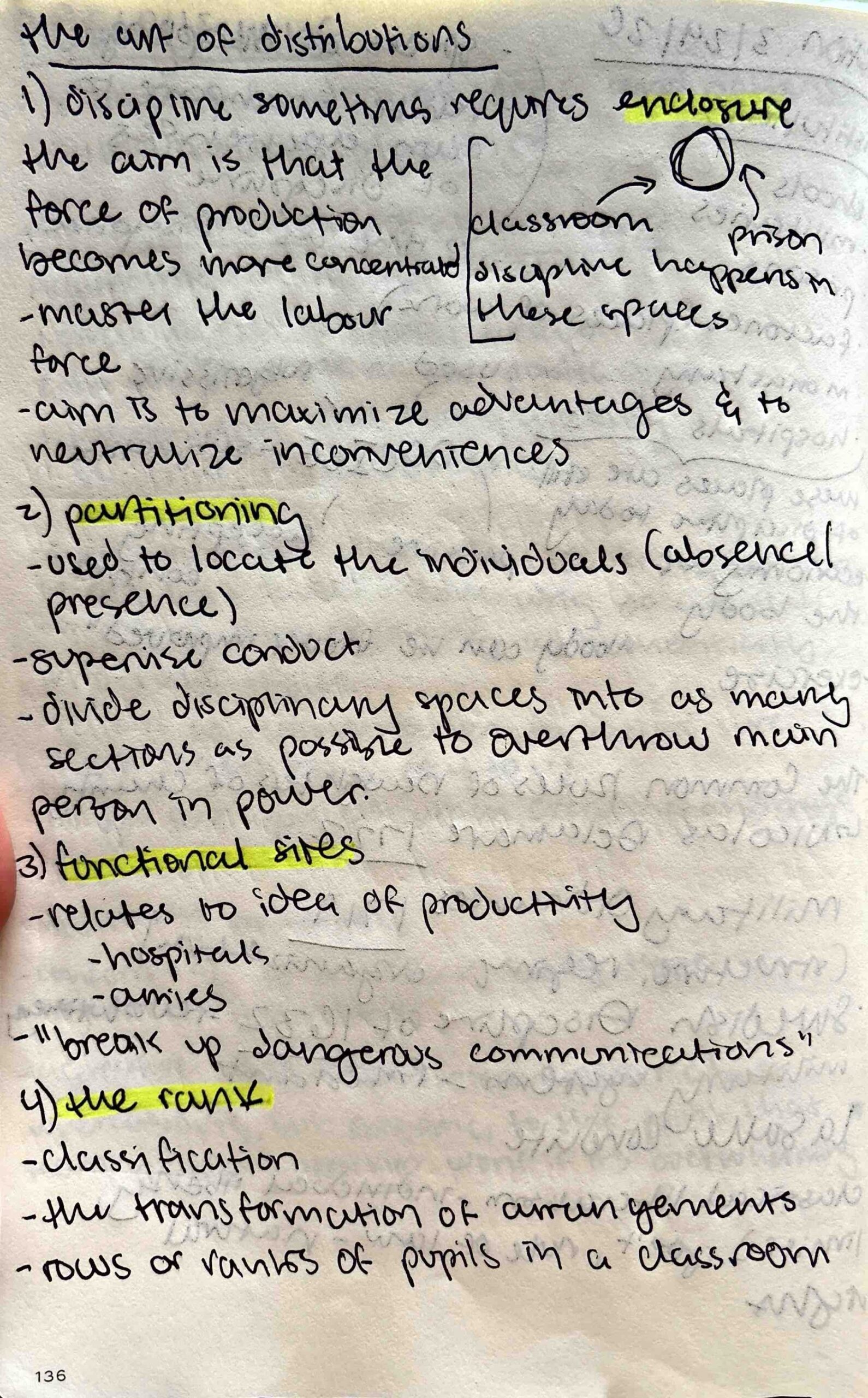
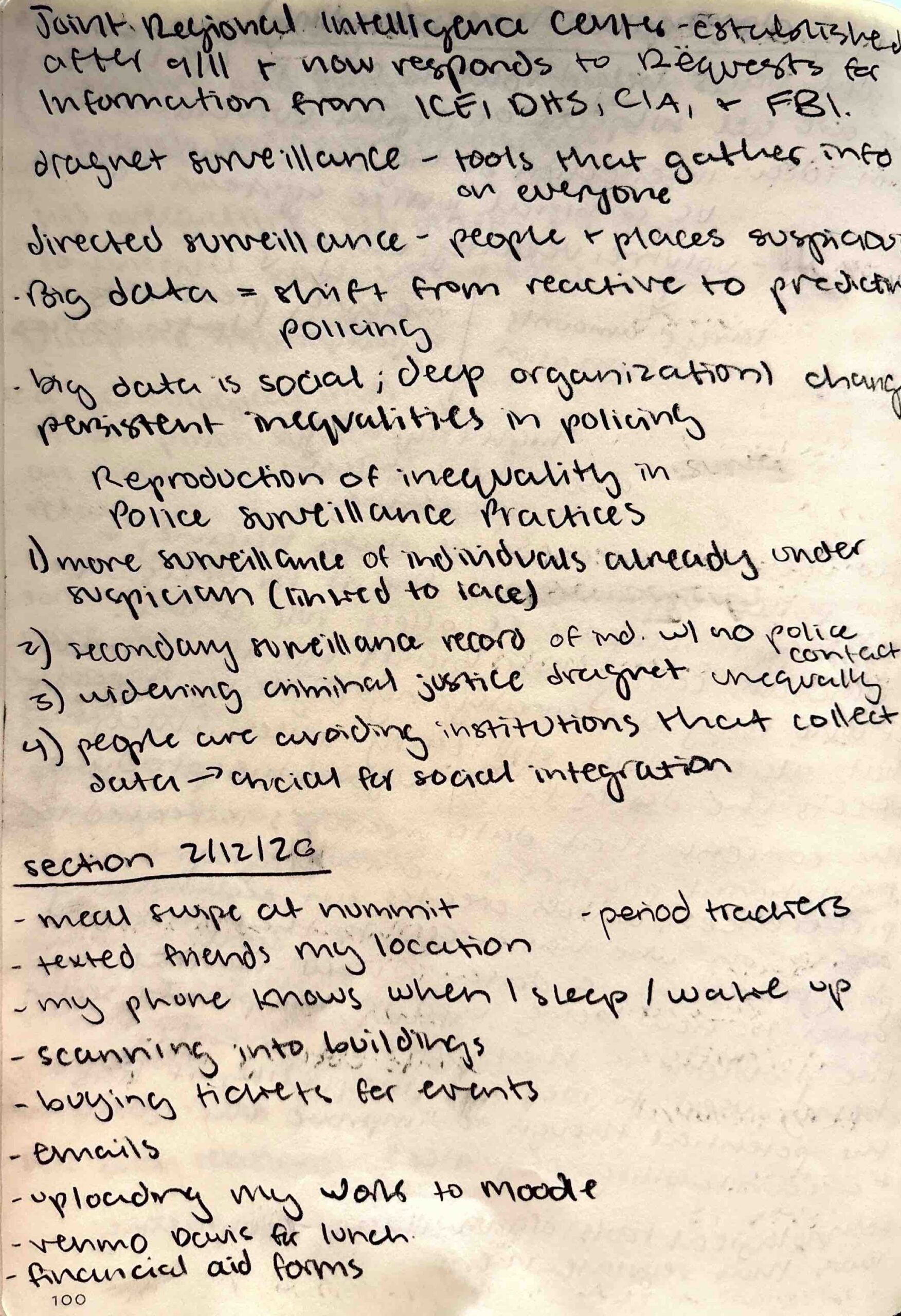
Meanwhile, we also have a looming thing over us- surveillance and tracing. As we take actions, we never know how that can put us in danger. We talked a lot about privacy, what that means in regards to our actions and political participation, who is targeted and why, and who is in control of our activities. Learning about surveillance with justice and how to act justly seemed like being watched is inevitable, and we must move forward with our moral actions regardless. However, it seemed like it is something that we can never escape. And injustice is something that we will never escape either- we must keep working forward, learning about our systems, engaging with our community, and reflecting on our actions.
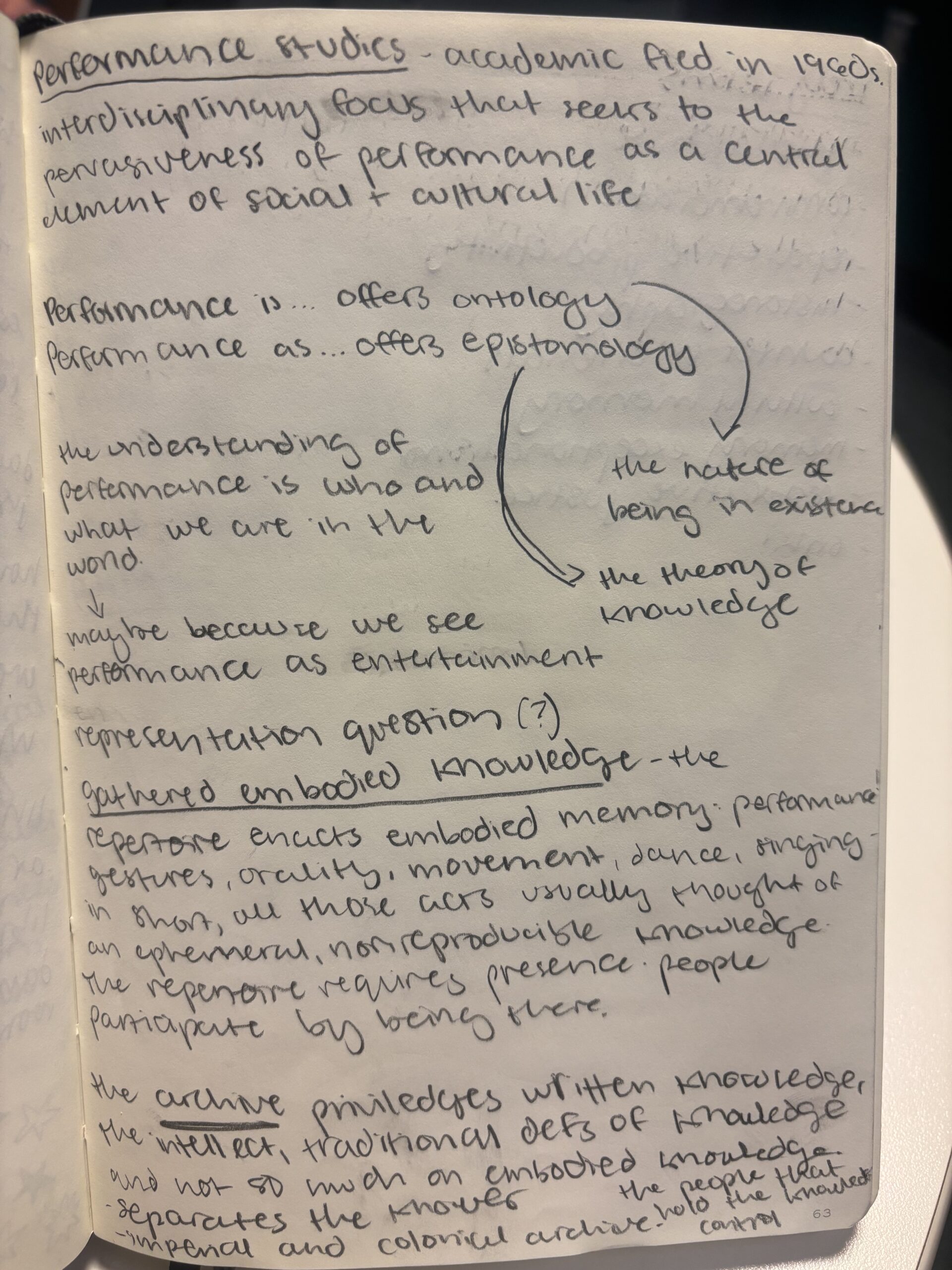
The images below of my jounral collectively piece together my understanding of justice.