Food, Foraging, and Justice
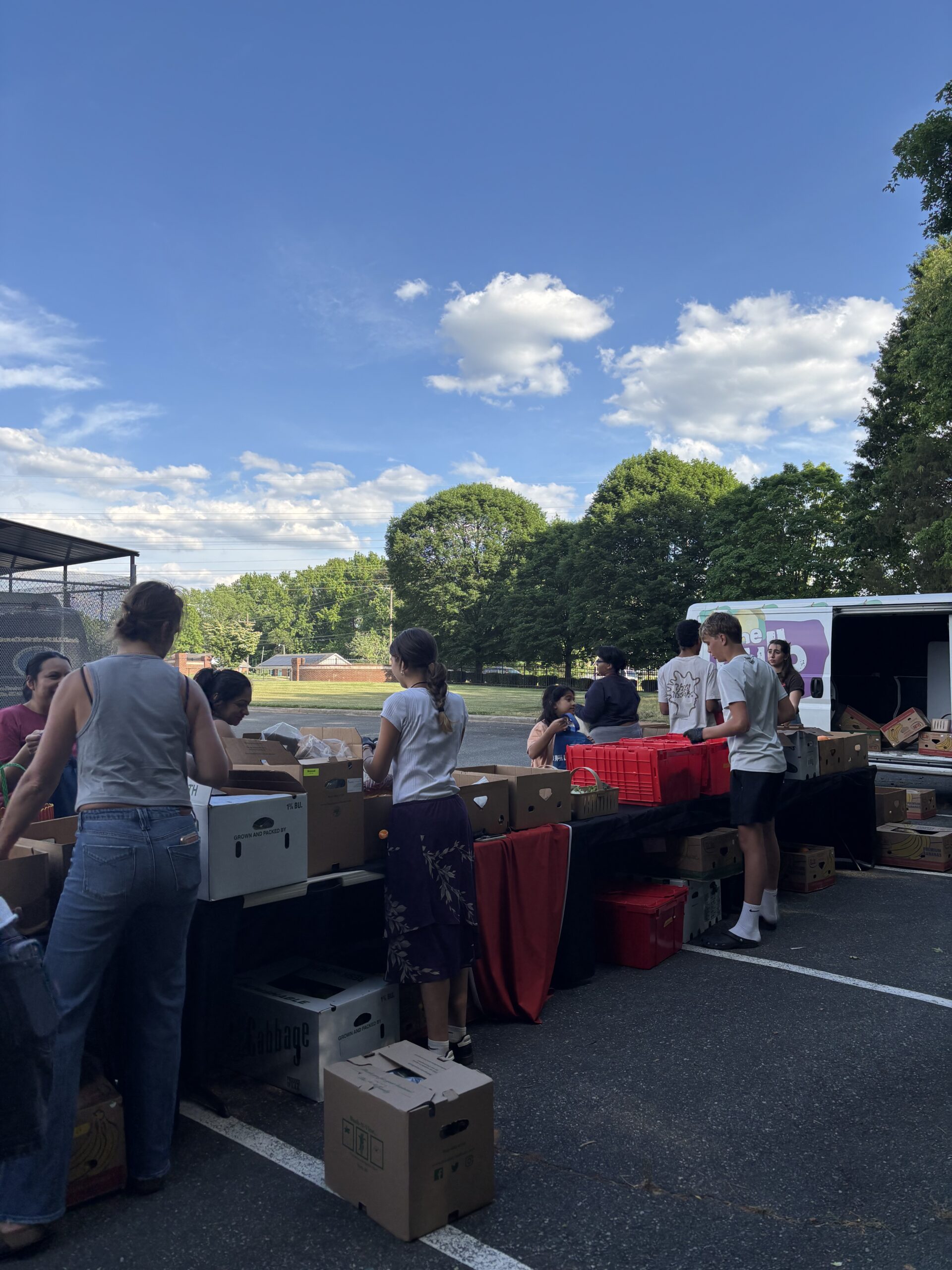
I have worked with The Bulb, a nonprofit organization in Charlotte, NC for these past two semesters of my freshman year. I started working there for my Bonner service site, and I chose that place to dedicate my hours to because I loved its purpose, intentionality, care, and leadership. The Bulb takes fresh produce from grocery stores (Trader Joe’s, Costco, and Whole Foods) that would otherwise have been thrown away, and distributes it back to the community, focusing on neighborhoods in Charlotte that are socioeconomically disadvantaged. Community members can expect there to be a fresh pop up farmers market throughout the week at different locations throughout Charlotte. The food that is not suitable to give back to the community, we take it back to the warehouse and compost it, and reuse the containers that they were in, wash them, and store more food inside. There is zero waste, and people who have to choose between gas and groceries do not have to compromise healthy eating.
I dedicated my Something New Nontextual from the first semester about food injustice, food inequity, and my relationship with food and justice, and decided to make this Collaborative Something New as a “part two” to that. This time, I brought my friend, Sophia Knowles, along for the ride. I wanted to invite Sophia to help me volunteer at the Bulb because I knew she was just as passionate about food waste and nutrition. Sophia is also the leader of the Foraging Club, which she has been trying to start at Davidson College this semester. She hosted Robin Greenfield, a famous forager, and he came to Davidson to teach us how to forage. About 50 members (most of them non-students) gathered to learn about the sustainable practice. Sophia She has run into some difficulties getting permission from the school to start the club, since they have told her that it could be very risky and dangerous. She has expressed frustration about this, saying that risk is involved in many things (for example, having fraternities and eating houses that have many underage and irresponsible drinking) but that the school won’t endorse a club that is spreading knowledge about sustainable practices. I connected this Collaborative Something New to our learning about Cheapness and food cheapness.
I interviewed Sophia about her experience at The Bulb, her leadership efforts starting the Foraging Club, and food sustainability and justice/injustice.
Interview
Carolina: What were you expecting when I asked you to volunteer with me at The Bulb?
Sophia: I was expecting to learn about local food systems and organizations and expecting to help people out with food waste. I really liked how the volunteers were connected to the ones that were serving. We were treating them like people and friends. It made it more humane because people in need don’t want to feel like you’re above them. I like that they’re conscious about making sure food doesn’t go to waste.
Carolina: Why is food sustainability important to you?
Sophia: Food is everything. Everyone needs to eat. There’s a huge flaw in the system where people in need don’t have access to quality food. Even nutritional food is ultra processed and sometimes people don’t have grocery stores near them. Giving them whole foods is really important. People that are in poverty end up with a lot of illnesses and obesity and chronic illnesses, something that they didn’t have a choice in.
Carolina: Why is foraging important?
Sophia: We lost touch with our food source. Being able to be in direct contact with it is how we originally operated.
Carolina: What does food justice mean to you?
Sophia: Food justice is about people having access to whole foods. In terms of waste, it’s unjust that there’s excess food and the majority gets thrown out. There are people who don’t have access to food outside of fast food chains.
Carolina: How has it been trying to bring foraging to Davidson?
Sophia: It’s been hard. There is lots of stigma around foraging and nature, and how it is separate from humans. The separation is deeply ingrained into us. People just think of poisonous plants. I want people to think about recovering knowledge about what’s around us. At an institution like this that values knowledge so much, it’s important to be able to discern what you can and can’t eat. What knowledge is more valuable than that? It’s food from the source. There is a lot of fear around it but fear comes from not having knowledge. What I’m trying to do is bring that knowledge to people and help people not be afraid of it.